Your Pricing Calendar
A comprehensive planner for all your rates and recommendations, room by room and day by day
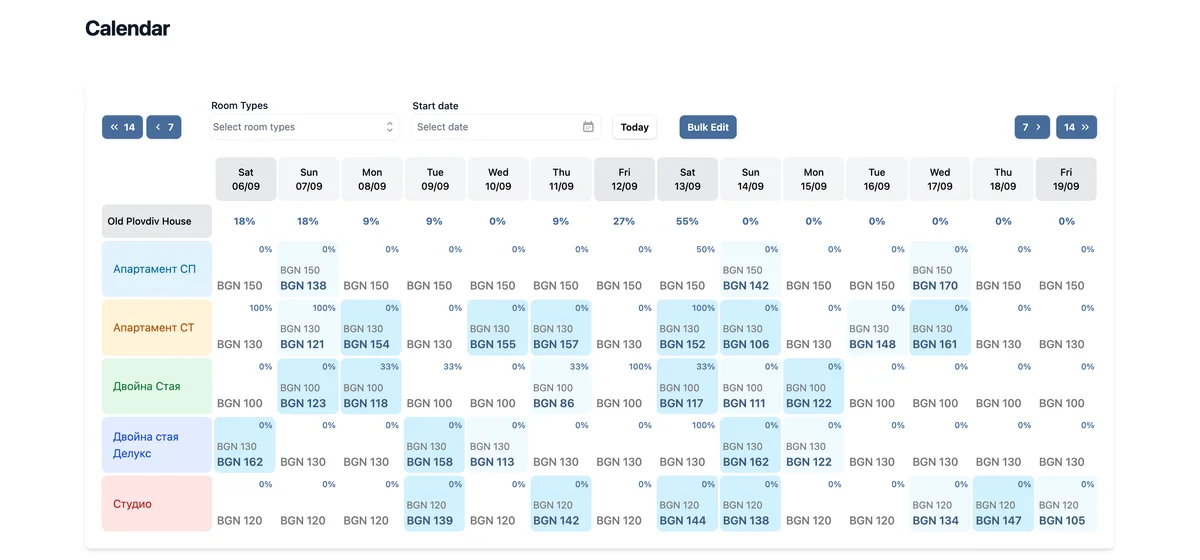
Stay ahead with an interactive calendar view
Easily visualise and manage your hotel's pricing strategies with our intuitive calendar view.
- Browse by period
- Move between periods with all room types and rates in one view.
- Bulk changes
- Adjust daily pricing or apply bulk changes with minimum effort and maximum visibility.
- Complementary charts
- Availability and occupancy charts allow you to have a complete view of your performance when making a decision.
- Price trends
- The price trend chart shows how your rates and recommendations change over time.
How Sigma Revenue Works
Synchronise
Our team connects your supported hotel system, imports your data and helps with setup. Full onboarding usually takes 1–2 weeks.
Analyse
The system analyses historical and current hotel data and competitor prices.
Optimise
Get actionable rate recommendations for a whole year in advance to maximise your revenue potential.
Related Terms
CTAClosed to Arrival
A stay control that blocks new check-ins on a specific date while allowing guests already in-house to continue their stay. Hotels use CTA during high-demand periods to prioritise longer stays and maximise revenue—for example, closing arrivals on Saturday to capture more valuable Friday-Saturday bookings rather than Saturday-only stays.
Learn more →CTDClosed to Departure
A stay control that prevents guests from checking out on a specific date, requiring them to extend their stay through that date. CTD is used to fill gaps in occupancy—for example, if Tuesday shows low demand, closing departures ensures guests checking in Monday must stay through Tuesday, improving overall occupancy patterns.
Learn more →LOSLength of Stay
The total number of nights a guest stays during a single visit. Average LOS varies significantly by segment and destination—resort guests may average 5-7 nights while city business hotels see 1.5-2 nights. Understanding your LOS patterns helps optimise pricing strategies and apply appropriate stay controls during high-demand periods.
Learn more →MLOSMinimum Length of Stay
A stay control requiring guests to book at least a specified number of nights. MLOS protects high-demand dates from being blocked by short stays—for example, requiring 2-night minimum over a weekend ensures you don't sell Saturday-only and leave Friday unsold. Apply MLOS strategically based on demand patterns and booking pace.
Learn more →Seasonality
Predictable, recurring patterns of demand fluctuation that repeat annually, weekly, or around specific events. Understanding your property's seasonality—high/low seasons, strong/weak days of week, local events impact—is fundamental to effective pricing. Seasonality forms the baseline demand pattern that booking pace and pickup data are compared against.
Learn more →Related Articles
Pricing During High-Demand Events: A Playbook for Compression Nights
How to prepare weeks in advance: estimate event impact, set dynamic pricing guardrails, use stay controls, and manage channels to capture peak value.
Read more →Booking Window Trends: What Shorter Lead Times Mean for Pricing
How to analyse booking windows by segment and channel—and how to adapt your dynamic pricing cadence and stay controls when guests book later.
Read more →Ready to get started with Sigma Revenue?
Let's discuss how Sigma Revenue can help you optimise your hotel's revenue management.